Showing posts with label Eastern Bluebird. Show all posts

29.12.11

Mountain Bluebird


This morning I set out to find the Mountain Bluebird that has been present in the Calverton area for approximately a week. There were a few other birders who were out there as well which helped because one of them located it along the fencing at the Haunted House on 25A and alerted me to it. While the bird didn't come nearly as close as I'd hoped, it was still a pleasure to photograph this rare visitor from the West.


Since I was out and about I figured I'd try and see if anything else of interest was around. Some time at EPCAL produced a flock of Eastern Meadowlarks and a handful of Savannah Sparrows - but there were some raptors as well. Two Red-tailed hawks were perched in a tree next to each other, Northern Harriers were hunting near the runways and a couple American Kestrels were seen including this one which was a bit more cooperative than usual.


In addition to the above mentioned birds were a couple male Eastern Bluebirds (which were far more attractive than the drab Mountain Bluebird).  Another Red-tailed hawk was spotted on a light pole in Aquebogue, and I had time for a brief visit to the new North Fork Preserve Suffolk County Park which yielded a Red-tailed hawk being chased by a Cooper's. All in all a nice cold winter day with some raptors and a species of bird that's new to me.


For more on birds that can be found around Long Island - check out this book by John Turner: Exploring the Other Island: A seasonal guide to nature on Long Island


5.5.11

New birds for me @ EPCAL


Had a wonderful vacation down in Florida - not too much on the bird photography front though I did find some Mottled Ducks (which happened to be waiting) so it was a new species for me.  Also had a wonderful experience with a family of Barred Owls and Limpkins - but only had the iPhone camera handy for those!  Photos to come.  In the meantime - enjoy these shots from EPCAL today.

When I first got to the site I was looking down while driving the runway (at a slow - safe speed) adjusting my camera settings and when I looked up this Red-tailed Hawk had exploded out of the grasses (I think it had been eating when I inadvertently disturbed it) with a snake in it's talons.  I've never noticed a snake @ EPCAL and never seen a RTH with one so that was pretty cool.  As it approached the treeline a Kestrel came to harass it for a bit and the hawk then disappeared behind the tall pines.


Shortly after that I came across this Eastern Kingbird - the first time I've seen this grasslands species at this site.  It was having a grand time hawking dragonflies and other insects (see the top of this post).

While leaving the site through the maine south entrance, two grackles flushed this Baltimore Oriole out of the trees adjacent to the pond and I was able to snap off a quick photo which appears to show some bit of food in the Orioles beak (a caterpillar perhaps?).


Other birds seen at the site were tons of Barn Swallows, a murder of Crows, about 12 American Kestrels (way down in number from right before easter when I had at least 30 on just the Western runway), plenty of deer, some Eastern Bluebirds and a few marmots (groundhogs) on the northern radar parcel.

Also, as I was leaving the runway a Riverhead police officer pulled up to me (I guess he had seen me while he was driving through) and asked me if I had a reason to be on the runway.  I told him that I was doing photography of wildlife (and had my camera on the seat next to me).  He said that "they dont' really want people on the runway - I guess because it's an emergency landing strip - so just keep that in mind, ok?"  The officer was very nice and it was clear he didn't have a problem with me there, but that it's not the most favorable use of the site. So just keep that in mind!

If you are interested in learning more about hawks, I recommend picking up this book - Hawks at a Distance: Identification of Migrant Raptors - which has everything you need to know about ID'ing these birds when they are far off - like the Red-tailed hawk was when I spotted it today.


Hawks at a Distance: Identification of Migrant Raptors

16.2.11

Eastern Bluebirds and Rough-Legged Hawk

NIkon D300s 300 f4 + 1.7X TC, f/8, 1/800s, ISO 500

I was able to make it to EPCAL before the sun went down late this afternoon and was happy I did. In addition to a Turkey Vulture that spent a little time perusing the grasslands looking for a snack and a grey ghost (male Northern Harrier) that was briefly spotted, 4 Eastern Bluebirds were singing and flitting around the center grass median while a Rough-legged Hawk was busy catching a vole. (Learn how to ID rough-legged hawks from afar by reading Jerry Liguori's Hawks at a Distance: Identification of Migrant Raptors) It was certainly one of the more productive visits to EPCAL in recent weeks - and as I left I noticed a herd of at least 60 deer to the North of EPCAL on the adjacent grasslands piece. Seeing all of those deer grazing on native grasses is such a rare sighting on this island you simply have to see it to appreciate it. (Above: Male Eastern Bluebird / Below: Female Eastern Bluebird)
Read more �

2.2.11

EPCAL Grasslands Safe for....

A Northern Harrier taking a break
... at least Two more years! According to today's Newsday (February 2, 2011), Riverhead has hired the consulting firm of Vanasse, Hangen Brustlin Inc. of Watertown Mass. for just shy of a half million dollars to review EPCAL (Enterprise Park and Calverton). The consulting group will conduct a comprehensive study to come up with a new zoning plan for the property which has mostly languished for the past 12 years since the Town of Riverhead received ownership of the property from the Federal Government. Recently two mega projects have fallen through the cracks, with the Rechler's (a dynamic cousin duo with deep pockets and a penchant for holding local governments hostage over development plants) backing out after being told they could not construct housing on site, and the infamous "Riverhead Resorts" plan (which called for an indoor ski resort, among other things) was finally shot down by the Town after a long lapse in payments. The fact that the Town strung Riverhead Resorts along for so long was pretty pathetic with the developer looking like someone owing a mobster a big debt and "promising" to pay next week. Well thanks to these ineffective business plans, the grasslands at EPCAL and the 1,200 plus acres they cover are safe for a few more years.
Read more �

4.5.10

Ducklings and more

Ducklings:
The other day I visited Quogue Wildlife refuge in the hopes of photographing the carnivorous plant known as sundew, but quickly became distracted by a mother and her 8 ducklings.  Unfortunately the lighting was non-existent so I was forced to swap lenses frequently in an effort to squeeze out as much light as possible by using the largest aperture (smallest f-stop) possible.  My 300 let me shoot at f4, while my 105 + 1.7X let me shoot at f/4.5, but only at 180mm.  The biggest problem was that the ducklings wouldn't sit still for a second, so my shutter speed had to be high which meant my ISO had to be high... my percentage of "keepers" would have been much higher if there had been some sunshine, but I'm happy with what I was able to capture.


Eastern Bluebird:
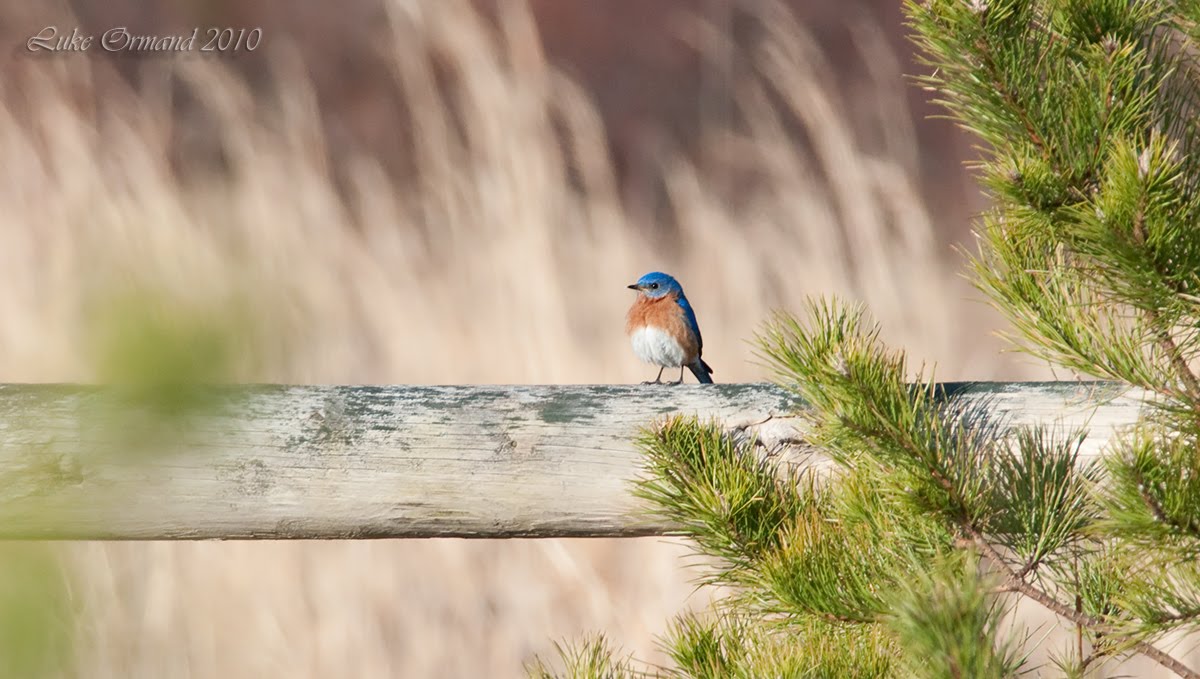
A few days prior to my duckling adventure, I went to EPCAL to photograph bluebirds which nest near the roadway in nesting boxes erected a few years ago.  It looks like they are a little behind the pace last year, as I didn't spot any females, but quite a few males that were trying to stake their claim.  This one was banded, and I have submitted the appropriate information to the USGS who forwards that to the group they believe are responsible - I'm still waiting to hear about the birds origins but will report back when I find out.


Here is a photo of another bluebird from the day before which isn't banded:


Peregrine Falcon and Clapper Rail:
Yesterday after not seeing anything of note along Dune Rd. I found this Peregrine Falcon drying its feathers after a severe downpour on the big coast guard tower.  I've seen Peregrine Falcons here fairly regularly over the last few months and am curious if there will be a nesting pair in the future on one of the CG structures of the Ponquogue Bridge.


Mike Lotito, at the same time I was photographing the Peregrine, had found a Clapper Rail (he heard it first) and eventually photographed it as it poked its head out.  I joined him in the same spot this evening and we waited for a while, listening to its distinct call.  After a bit, I tried to approach from the south in hopes of seeing it through the vegetation and sure enough it popped out long enough for me to get a few photos.  Unfortunately, the storm clouds were blocking the sun again, so they don't compare to previous photos of this species I've gotten. Shortly after this the sun popped back out - figures.


Ring-Necked Pheasant:
After leaving the Clapper Rail, Mike and I headed in search of the Peregrine (which was absent) but found this Ring-Necked Pheasant (an import from Asian which is now "wild") along Dune Rd. which was a bit of a surprise to me as I've never seen one in these parts.


Pine Warbler:
Lastly, on Saturday I took a brief foray into the woods in hopes of seeing some Warblers which everyone was seeing this weekend - I didn't have much time but found both a Common Yellowthroat and a Pine Warbler seen here:

27.3.10

Sunrise at EPCAL


Harriers and Meadowlarks:
I woke up ridiculously early this morning to get to EPCAL in hopes of seeing a good variety of birds in addition to a skunk that was seen recently.  Unfortunately the weather is going through a bit of a cold spell and it was about 25* this morning - likely spoiling my chances for seeing a skunk ambling around but it didn't prevent the birds from putting on quite a show.

The first thing I saw when I arrived was a Northern Harrier perched on some vegetation all the way on the South end of the runway.  Would have been nice to get closer but the lighting makes up for it a bit:


Back at the entrance to the taxiway on the northern end of the property was an Eastern Meadowlark which I found to be quite scarce today in contrast with my first visit:


Back to the South end and the Harrier was annoyed by a murder of American Crows that were hanging out - the Harrier (a juvenile) tried out several perches perhaps trying to figure out what to do about these annoying raucous birds:


It didn't take long for the Harrier to decide to give the Crows a run for their money and chase off the most annoying of the bunch:


... it wasn't long before the Crow tried to turn the tables:


Bluebirds and more:
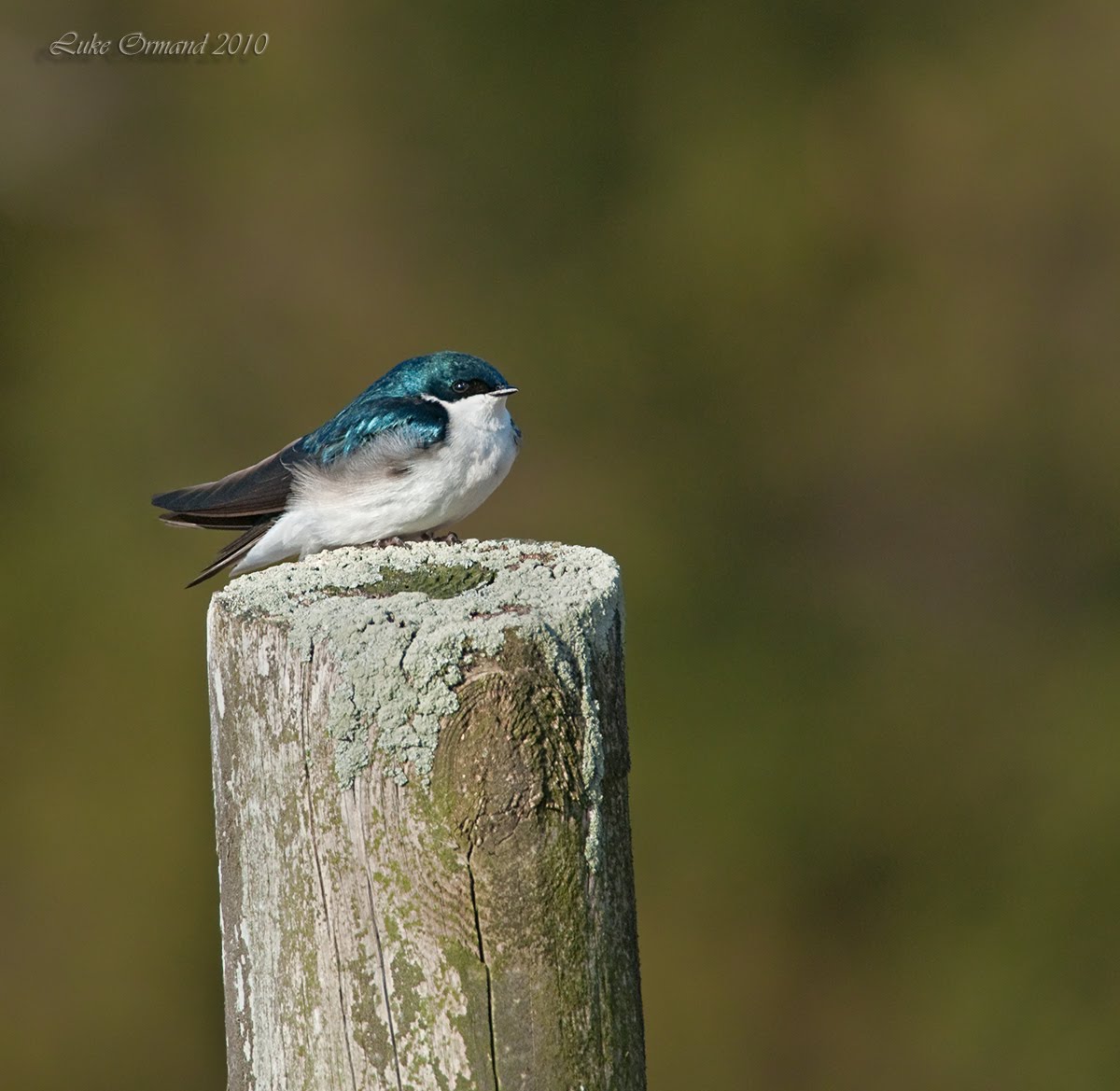
After driving around a bit I noticed some movement to the West of the end of the tarmac and spotted an Eastern Bluebird checking out the many nesting boxes setup.  I went for a walk and was surprised to not only find a few handsome male Bluebirds but a cooperative American Robin, and even better, 2 Tree Swallows who were probably far to cold to think about wasting energy flying.


and the 2nd Swallow. . .


As I took a few more loops around the runway/taxiway I spotted a female Northern Harrier perched on the ground and thought for sure it would bolt as soon as I stopped but it surprisingly stayed still.  I got into a better position - assuring I could get catchlight if I got the proper head turn.  I wasn't worried about getting closer so it would fill the frame as I knew it would take off eventually (the wind seemed to be bothering it) and had to leave room for the wings to move around in the frame.  The results are the best Harrier shots I have taken (after about 2 years of frustrating "practice" along Dune Rd" but still lack the catchlight on the eye:

Ready....

Takeoff!

And soar...


An American Kestrel was hunting in its "usual" place but was quite a distance away.  The auto-focus was struggling to keep focus because of the small size of the subject so I had to rely on manual focus for this shot - which I must say I'm pretty proud of.  Too bad the background isn't more pleasing.


More Swallows:
I was just about to leave when I saw a flock of Tree Swallows flying above the pond at the entrance to EPCAL and thought I'd see what I could get.  To my surprise, 3 Barn Swallows were mixed in the flock.  The lighting was getting a bit harsh at this point and I couldn't get the angle I wanted for most shots but still the best ones I have of this species together.


One of the Tree Swallows was checking out the nesting box to see if it was suitable.  Tree Swallows and Eastern Bluebirds will nest adjacent to one another - but once a Tree Swallow has occupied a nesting box, it won't let another couple of the same species nest nearby, thus allowing the Eastern Bluebirds (who nest later in the spring than many birds) a chance to move in.  


Phragmites may be annoying and "ugly" but it creates a perfect perch for these light birds: