Showing posts with label Eastern Meadowlark. Show all posts

29.3.11

Flying Eastern Meadowlark

NIkon D300s 300 f4 + 1.7X TC, f/9, 1/2000s, ISO 500, -.33 EC, cropped to 37%

I told myself I wasn't going to go to EPCAL today after work - but the clear blue skies and sunshine were calling and I couldn't resist. . . It was the same as it's been the past couple weeks - tons of Kestrels and a few other birds that are all annoyingly skittish but I had some success today including the Eastern Meadowlark seen in flight above.

In related news, The Town of Riverhead (owners of EPCAL) are suing the NYS DEC over new legislation regarding the Endangered Species Act.  Riverhead fears that the new regulations are too stiff and will make it impossible for them to sell the acreage available at EPCAL (and that's a bad thing...?).  For more information please see the story at News12 (sorry for those non-Cablevision subscribers who certainly will be blocked from accessing this).  An abridged version of the story reads below:


Riverhead sues DEC over endangered species regulations
(03/29/11) RIVERHEAD - The Town of Riverhead has filed a lawsuit against the state Department of Environmental Conservation over new regulations aimed at protecting endangered species, claiming they could place a financial burden on property owners.
Farmer Lyle Wells says before the new regulations, property owners would only have to buffer an area around endangered species, but now owners must hire a consultant to identify endangered species and monitor their growth forever. That could cost thousands of dollars a year.
Riverhead Town Supervisor Sean Walter says the new regulations will kill jobs and complicate the town's efforts to sell 1,400 acres of property in Calverton. Walters also complains the rules were enacted without any public input.
Dick Amper, of the Long Island Pine Barrens Society, says if Riverhead can't sell its land, it has only itself to blame.
"We've been protecting endangered species for 100 years, and no one has gone out of business as a result," he says.


To learn more about endangered species on Long Island and across the globe, pick up a copy of Carl Safina's The View from Lazy Point: A Natural Year in an Unnatural World


19.3.11

Morning Migrants

An American Kestrel waits for the sun to peak back out

This morning I set out at sunrise to see what was around on the day before Spring.  I started at EPCAL since Low Tide wasn't due at Dune Rd. until the afternoon.  When I got on the runways a little after 7 I saw two bright white birds flying overhead and the photo below confirmed my suspicions that they were Great Egrets (moving northwest) which are the first of the season that I've seen.  I was hoping to spot some Eastern Bluebirds but was shut out - the same can't be said for Eastern Meadowlarks which were busy calling for mates and a couple of Horned Larks that are still hanging around.  On the Eastern runway a Savannah Sparrow was signing atop a small shrub.

A welcome sight to see the day before Spring
Turkeys are always a nice species to note at EPCAL:

It's amazing how skittish this species remains
This is easily the closest I've been to a Horned Lark and it gave me a pretty clear shot:

Horned Lark scavenging for food
A Savannah Sparrow was seen singing
On the raptor front were at least 7 American Kestrels busy hunting and hanging out.  I did not see a "pair" like I did in my previous post, but females and males were both present.  A few Northern harriers were lazily hunting over the grasses and a Red-tailed Hawk was also spotted - but Rough-legged hawks were unfortunately absent.

Just hanging out on a Rose bush along the Eastern runway

When I got to Dune Rd. I was disappointed to not spot any wading birds but after waiting around for a bit these American Oystercatchers showed up just east of the Ponquogue Bridge.  Aside from that things were very slow.  My backyard, however, has played host to American Goldfinches all morning which is always a nice treat - too bad they are so camera shy.

A pair of Oystercatchers hunting along their new territory
If you're like me and have a real love of raptors big and small - then you'll want to pick up a copy of Jerry Liguori's latest title Hawks at a Distance: Identification of Migrant Raptors which features one of my Gyrfalcon photos.


18.10.10

Grasslands Migrants


Eastern Meadowlark

I visited EPCAL (Grasslands @ Calverton) this evening after work in hopes of spotting a Short-eared Owl as a few were seen over the weekend at Robert Moses State Park.  No luck on the owls, but I did however find some Eastern Meadowlarks and Horned Larks (both a surprise for me) in additional to Kestrels and a flock of Turkey.  I apologize for the poor quality of the images in advance - the lighting and birds weren't cooperating.  
Turkey
Horned Larks


4.4.10

First Cattle Egret

Cattle Egret:
A trip on Friday to Montauk gave me my first Cattle Egret that I spotted along Montauk Hwy. feeding in a swollen marsh in Napeague.  This egret is almost in full breeding plumage - it's lacking the deep red on the bill and the purple around the eye and is somewhat of a rare site on Long Island.  While there were 5 individuals seen this week (this one included) they are not common, though they've been increasing over the past few decades as they expand their range north.


Harlequins:
Also out in Montauk were some gorgeous Harlequin Ducks in full breeding plumage - which I was not able to photograph earlier in the winter with the harlequins that were hanging around Hampton Bays.  One of the ducks was quite aggressive in chasing off this White-Winged Scoter for unknown reasons.  The male Harlequin would run across the water (see below) then when the Scoter dove, the Harlequin would follow suit.  Not quite sure what the Harlequin was going to do if it actually caught the Scoter but it was amusing to watch.


Shu Swamp:
A trip to Shu Swamp in pursuit of Owls left me disappointed - but I did see a few Wood Ducks which are a secretive species and flush easily.  This pair flew onto this tree branch and were hanging out in the late afternoon sun.  Wood Ducks are an interesting species as they nest in the cavities of trees - sometimes at significant distances from the water.  Once the young hatch they jump (fall) out of the tree and march to the water with their parents.


Others:
On Thursday I went out on a boat with the USFWS to an island we were doing habitat restoration on.  The boat was docked at Wertheim federal wildlife refuge and a long trip down the Carman's River to Moriches Bay provided some good photographing opportunities:


Unfortunately I clipped the top of the wing on this action shot of a Double Crested Cormorant:


The Carman's River was full of Osprey and I was able to get pretty close to this one as it flew overhead in search of fish:


EPCAL Evening:
I ended my day with a trip to EPCAL where the Kestrels were somewhat cooperative and I added a new bird to my files, the Horned Lark (notice the "horns" on the head):


I spotted this female Northern Harrier along the taxiway which posed before taking off - I like how the side-lighting splits the bird in half:


This Eastern Meadowlark gave me a pose similar to the American Kestrel above:

As I was leaving I noticed a Killdeer on the side of the road being lit up by the setting sun:

27.3.10

Sunrise at EPCAL


Harriers and Meadowlarks:
I woke up ridiculously early this morning to get to EPCAL in hopes of seeing a good variety of birds in addition to a skunk that was seen recently.  Unfortunately the weather is going through a bit of a cold spell and it was about 25* this morning - likely spoiling my chances for seeing a skunk ambling around but it didn't prevent the birds from putting on quite a show.

The first thing I saw when I arrived was a Northern Harrier perched on some vegetation all the way on the South end of the runway.  Would have been nice to get closer but the lighting makes up for it a bit:


Back at the entrance to the taxiway on the northern end of the property was an Eastern Meadowlark which I found to be quite scarce today in contrast with my first visit:


Back to the South end and the Harrier was annoyed by a murder of American Crows that were hanging out - the Harrier (a juvenile) tried out several perches perhaps trying to figure out what to do about these annoying raucous birds:


It didn't take long for the Harrier to decide to give the Crows a run for their money and chase off the most annoying of the bunch:


... it wasn't long before the Crow tried to turn the tables:


Bluebirds and more:
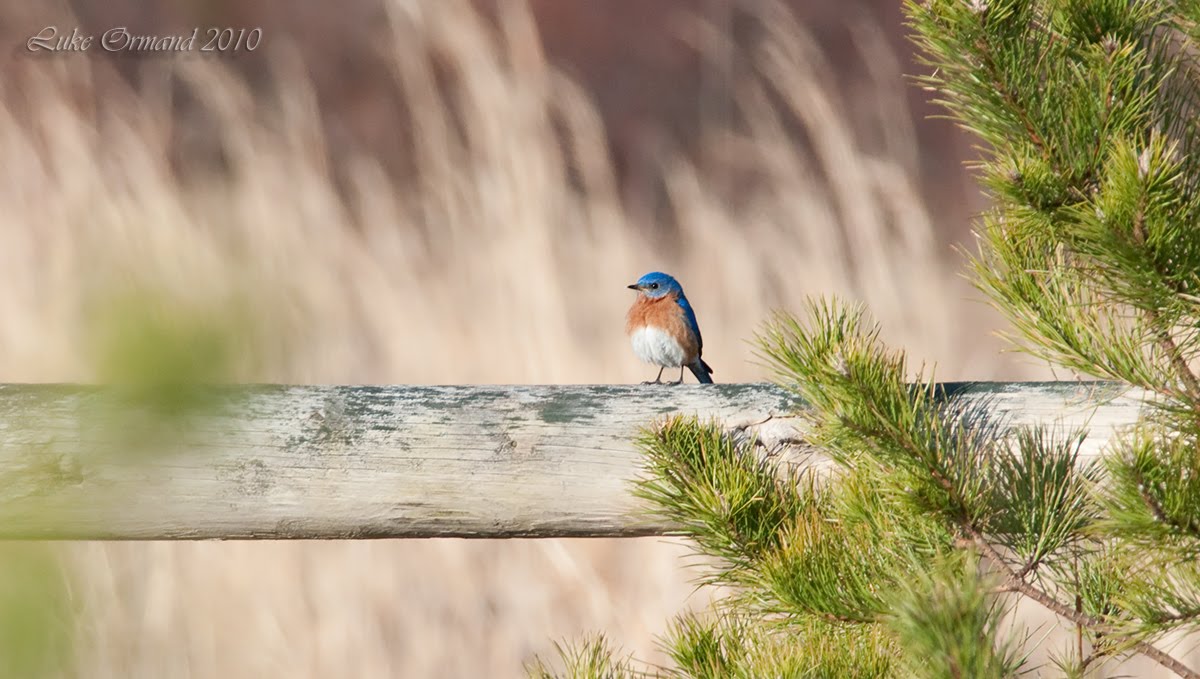
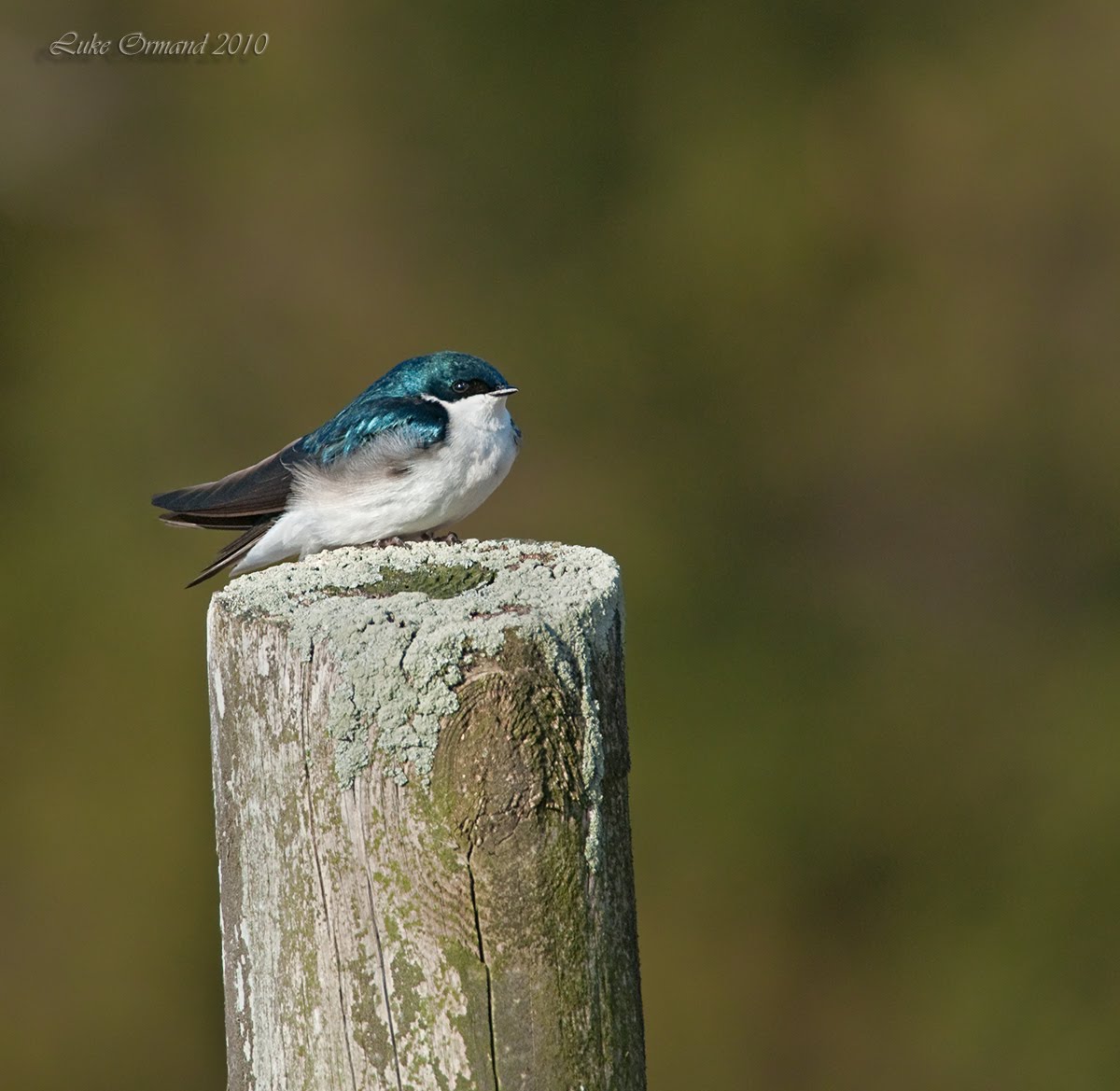
After driving around a bit I noticed some movement to the West of the end of the tarmac and spotted an Eastern Bluebird checking out the many nesting boxes setup.  I went for a walk and was surprised to not only find a few handsome male Bluebirds but a cooperative American Robin, and even better, 2 Tree Swallows who were probably far to cold to think about wasting energy flying.


and the 2nd Swallow. . .


As I took a few more loops around the runway/taxiway I spotted a female Northern Harrier perched on the ground and thought for sure it would bolt as soon as I stopped but it surprisingly stayed still.  I got into a better position - assuring I could get catchlight if I got the proper head turn.  I wasn't worried about getting closer so it would fill the frame as I knew it would take off eventually (the wind seemed to be bothering it) and had to leave room for the wings to move around in the frame.  The results are the best Harrier shots I have taken (after about 2 years of frustrating "practice" along Dune Rd" but still lack the catchlight on the eye:

Ready....

Takeoff!

And soar...


An American Kestrel was hunting in its "usual" place but was quite a distance away.  The auto-focus was struggling to keep focus because of the small size of the subject so I had to rely on manual focus for this shot - which I must say I'm pretty proud of.  Too bad the background isn't more pleasing.


More Swallows:
I was just about to leave when I saw a flock of Tree Swallows flying above the pond at the entrance to EPCAL and thought I'd see what I could get.  To my surprise, 3 Barn Swallows were mixed in the flock.  The lighting was getting a bit harsh at this point and I couldn't get the angle I wanted for most shots but still the best ones I have of this species together.


One of the Tree Swallows was checking out the nesting box to see if it was suitable.  Tree Swallows and Eastern Bluebirds will nest adjacent to one another - but once a Tree Swallow has occupied a nesting box, it won't let another couple of the same species nest nearby, thus allowing the Eastern Bluebirds (who nest later in the spring than many birds) a chance to move in.  


Phragmites may be annoying and "ugly" but it creates a perfect perch for these light birds:

24.3.10

Montauk and EPCAL

Montauk:
It's been awhile since I've updated and in the interim have started a new blog for all things natural and non-avian. That blog can be accessed here: Wild Long Island or by clicking "View Complete Profile" on the right hand side.  Over the weekend I was able to visit Montauk at sunrise for some seal photos I've been waiting to get all winter (and now into spring).  While there I was able to take in some Common Eiders and a cooperative Song Sparrow:


After leaving Montauk Point, I noticed some crows acting odd and had a hunch they were harassing a hawk.  I pulled over and sure enough a Red-Tailed Hawk was perched on a telephone pole with Crows dive bombing it until it finally flew off.  Accidentally took these at ISO 1000 so they are extra sharp!


EPCAL:
After hearing reports about Eastern Meadowlarks (which I've never seen nor photographed before) being present at EPCAL (Enterprise Park at Calverton) I decided to swing by after work since it's not too far out of my way and the lighting and temps were good.  As soon as I approached the former runway a Meadowlark shot across the road and hovered like a Kestrel letting me rip off quite a few photographs.  I have seen quite a few photos of this species on Nature Photographers Net (NPN) and was under the impression they allowed close approach - well the ones at EPCAL certainly can't be categorized as such as they spooked as soon as my car would come anywhere near them.  Maybe I'll have better luck if I go in the morning.


A little later in the evening I spotted this beautiful Eastern Meadowlark in full breeding plumage on a stand of Common Mullein:


Soon after this sighting I was cruising down the Western runway for the first time (I believe it has recently been "opened" to the public) and spotted a Female Northern Harrier who seemed to be cleaning her talons getting ready to catch her next meal:


It then flew in front of the sun for some nice backlighting on the feathers:


After this I spotted an adult Red-Tailed Hawk:


Next up was a pleasant surprise - an American Kestrel.  Have only had a few experiences with this species and this was certainly the best.  It paid no attention to my presence and let me get out of the car and approach a little closer on the grasslands.  It appears that it was hunting (successfully) some early insects - most likely grasshoppers.  Unfortunately for me however, this bird is really quite small (compared to other raptors especially) and even though I was "close" it still was small in the frame which results in lots of cropping and lower image quality.  The Kestrel was partaking in a distinct behavior called hovering where it abruptly stops in midair and quickly beats its wings like a hummingbird or steadies itself in a strong headwind peering down below waiting for the right moment to make its move: 


The American Kestrel blends in well to its preferred habitat: 


While the plant known as Common Mullein is invasive and not desirable in a "healthy" grasslands, it is a good perch for small falcons like Peregrines and Kestrels as this individual demonstrates:


I found another Red-Tailed Hawk which let me get 1 great shot before it flew off.  This is a rather unusual perch for a Red-Tailed Hawk as they prefer to be higher off the ground - but in a grasslands those types of perches are few and far between.  Unfortunately my AF didn't want to stay locked on the bird and ruined 3 potentially amazing flight shots.  Better luck next time.


I left for a bit to check on a reported Seal in the Peconic River not too far away and after striking out I thought I'd head back to the grasslands in hopes of seeing some Short Eared Owls which in past years have been regularly reported but only sporadically seen this year for unknown reasons (though sightings of irruptive species, such as Snowy Owls have been way down on Long Island).  There were no owls to be seen, but I did get another nice surprise, a male Northern Harrier, also known as a "grey ghost".  These are rarely seen because there are far fewer males than females of this species.  My last sighting of a grey ghost was about 2 years ago in a field in Sagaponack just north of Billy Joel's ocean front estates.  It's a shame the sun had just about set as my shutter speed was awfully low and the quality of the image isn't what I'd hope for but I'm still happy seeing and photographing this male hawk.