Showing posts with label birds. Show all posts

20.6.11

Nesting Least Terns


Least Terns are one of the most aggressive birds when it comes to defending their nesting sites from humans and other predators.  They will dive bomb you, they will crap on you, they will screech at you and they will even run into you.  But when I visited a nearby Least Tern colony via kayak this evening I didn't experience any of that.  I attribute that mostly to my knowledge of these birds after years of being around them and a few summers monitoring them.  However, I was also able to tuck in behind some vegetation which made me less visible and I think the fact that these birds are in a remote location they don't necessarily perceive man as a threat like their friends who nest at popular ocean and bay front beaches.  Either way, it was a real treat for me to photograph them so close.  In the above image, the least tern was trying to evade the other which had "goosed" it in a dispute over territory.


Above: The Least Tern after it was not so nicely told to get away.
Below: A Least Tern doing a little yoga. . .


Least Terns are very hard to catch in flight, but sometimes they hover which makes it slightly easier.


And one more flight shot for good measure. . .


If you are like me and have an affinity for birds, check out this guide book to birds on the east coast: National Geographic Field Guide to the Birds of Eastern North America (National Geographic Field Guide to Birds)


22.3.11

American Kestrel @ EPCAL

This bird eventually got tired of my vehicles presence

American Kestrels are notoriously skittish (and it doesn't help that they are so small).  They regularly line the runways of EPCAL and thus present a fun challenge for the photographer.  Every now and then I get a bird that's a little more cooperative than the rest and today was such a day.

Politely Posing

In addition to the above Kestrel above, there were 4 Turkey Vultures riding the thermals searching for carrion and an active Eastern Bluebird singing his heart out.  As expected, Eastern Meadowlarks and Northern Harriers were also present.

1 of 4 Turkey Vultures at EPCAL

And while Herring Gulls are not the most interesting bird, I thought some of you would be interested in seeing this portrait taken the other day at the Shinnecock Inlet along the jetty.  This was at just about the limit of my lenses focusing abilities and is full frame.

Full Frame - as close as you can get!
Be sure to view the post below featuring an image of the 'Supermoon' and also be sure to check out Theodore Cross's life's work in his book entitled Waterbirds


19.3.11

Lots of Raptors @ EPCAL

Cropped to about 50% off the original - this Roughie is soaring high

On Wednesday the sun was shining and it was the start of a few warm and blue-sky days.  On my way home from work I visited EPCAL and was happy to see so many Kestrels.  In just 20 minutes I observed 7 including what appears to be a pair (see below).  Additionally, 2 light-morph Rough-Legged Hawks, several Northern Harriers and a Red-tailed Hawk were present.

American Kestrel "hovering".  Cropped to just 20% of the original

Perching on the ugly but useful Common Mullein:

I'm including this shot even though the quality isn't great because it was just about full frame:

For more about birds and wildlife on Long Island I highly recommend John Turner's Exploring the Other Island: A seasonal guide to nature on Long Island which features a dozen of my photos including a photo of a Snowy Owl found last year on the beach in Hampton Bays.  This is a must read for bird lovers on Long Island


14.3.11

Mating Red-tailed Hawks

The Landing
Once again I took a drive along the runways at EPCAL.  A light morph Rough-legged Hawk and and couple Harriers were spotted (as expected) and right as I was about to leave I saw a hawk sitting on a nest book.  I looked through my camera to confirm my belief that it was a Red-tailed Hawk perched atop the box (just as one was on March 1st of this year), but this time there was another Hawk in the immediate area.  I had my camera ready as I expected one hawk to scare off the other - but instead it landed on top of the bird and appeared to copulate.  I apologize for the poor quality of the images, but the birds were approximately 650 feet away!  Either way it was cool to see as it happened in just a few seconds and then the male took off to the woods.  Hopefully there will be young red-tailed hawks (and other raptor species) in the near future.

Finishing the Act
And lastly. . . 

See-ya!

For those interested, here is a story from NPR about the California Audubon Society attempting to attract younger members.  An amusing and quick little story (or podcast if you prefer).  It can be accessed here: Birding is exactly what it used to be

And for those looking for an excellent book to read to pass the next few weeks until Spring has truly arrived, pick up Carl Safina's latest title: The View from Lazy Point: A Natural Year in an Unnatural World which starts on Long Island and takes him around the world.  Highly recommended!


6.3.11

Book Review: The View from Lazy Point, by Carl Safina


Montauk Lighthouse - a mere stone's throw from Lazy Point

The View from Lazy Point: A Natural Year in an Unnatural World is Carl Safina's latest book which I recently received in the mail.  While I've known of Dr. Safina for some time (he is the President and Co-Founder of the Blue Ocean Institute) and had the privilege of listening to some of his guest lectures while I was a student at SUNY Stony Brook University, The View from Lazy Point made me feel like I have met him many times before.  Dr. Safina's inviting prose and carefree candor lets the reader experience the far flung trips and lazy local fishing jaunts with ease.  This book reads like an in-depth, year long journal, following the author as he struggles to grasp the perils of this unnatural world and balance them with the familiarities of his aptly named home.

A dovekie - the Penguin of the North

In today's scientific and ecological world, it's easy to be overwhelmed by the bad - the scary end-of-the-world scenarios that Al Gore and the like brought into our living rooms.  How does one escape the ill effects of the never ending CO2 smokestack, the bleached white coral reefs of the Caribbean or the melted glaciers of our polar regions?  Even the most optimistic scientist struggles with this task, but Dr. Safina makes it a point to see the natural good left in the world and appreciate it.  He may not stop to smell the roses - but he does pause to pursue the bass and bluefish that remain abundant in his backyard.  While each new month in this book brings with it a reminder of what has been lost, it also brings reminders of what remains, or in those rare instances, what has come back.

An Endangered Roseate Tern forages on Long Island

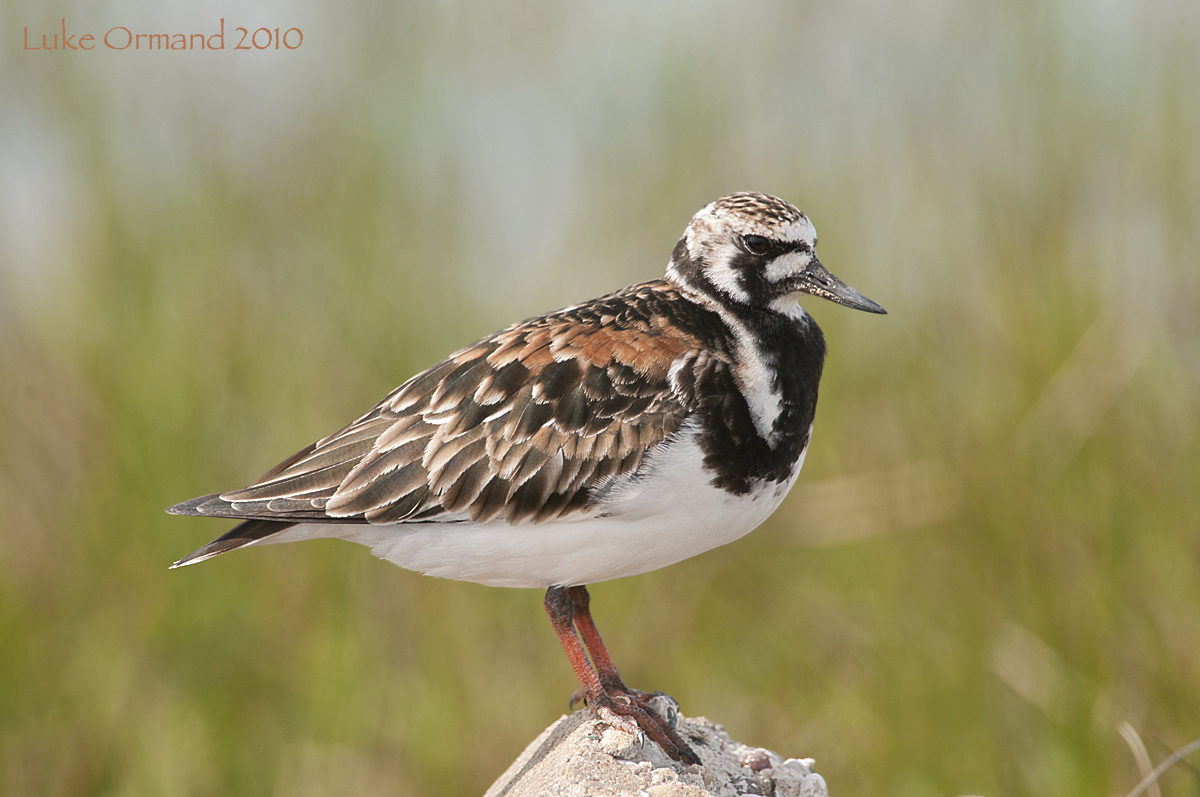
Thanks to the dedication of a former federal biologist (Rachel Carlson and her 1962 book Silent Spring) and the non-profit environmental advocacy group the Environmental Defense Fund (founded on Long Island by the likes of former SUNY Stony Brook professor Charles Wurster and former BNL Scientist Dennis Puleston) birds like the Osprey and Peregrine Falcon got a second lease on life and are now common visitors to Lazy Point and the rest of Long Island.  Even after a long and cold trip to Antartica, where Dr. Safina sees first hand the raw chain reaction effects of climate change, he can return home and witness the abundance nature continues to offer, like harbor seals loafing yards from his bedroom window.  The Ruddy Turnstone - that small and unmistakable multi-colored shorebird - is a metaphor throughout the book.  It seems to follow the author nearly wherever he goes and suggests that while things are bad, not all is lost.  There is hope.  Things can change.  Beauty and natural wonder, they surround us.

A Ruddy Turnstone during migration

The View from Lazy Point is an eye opening adventure and scientific endeavor.  By book's end, the title takes on a literal meaning.  The View is not simply the picture that mother nature paints outside Dr. Safina's beachfront cottage.  The entire world truly can be seen from Lazy Point - every link in the food chain - every side effect of man kind's gluttonous and wanton ways.  The author analyzes the ravenous desires of man and points out the political and economic hurdles that pit us against a natural world in harmony.  This book is not to be speed read to discover the ending - for there is no "ending" to the problems that face us.  It is a glimpse in time, a mere fraction of a second on planet Earth's clock that shows us where we are and how we got here.  Dr. Safina does not have every answer for every problem facing us - but he gives us guidelines to right the ship before we discard our miraculous gifts like so many others we have swept under the proverbial carpet.  If we stop being selfish, stop justifying our wasteful ways because we are the "Have's" and therefore can exploit the shares of the "Have Not's" - then we can get back on the proper heading.  The modern world is used to throwing the used and spent in the garbage - but there is no landfill to toss nature into - only a cold and dark grave.  Writes Dr. Safina, "To advance compassion and yet survive in a world of appetites - that is our challenge".

Please click on the image below to purchase this book from Amazon.com.  It is easily the most thought provoking environmental book I've had the pleasure to read and it will both entertain you and influence how you see the world.  And if you're living on the Island, a trip to Montauk is in order once you have finished this journey.


19.2.11

New Welcome Banner

As the loyal readers will know "Birds of Long Island" has undergone a major visual overhaul in recent weeks which was long overdue.  One of the final pieces to be put in place was the "Birds of Long Island" banner you see at the top of this page.  It's something I've been meaning to do for a long time but for a while didn't have the skills to do it - and for a long time didn't have the motivation.  Well, I'm glad I finally got around to doing it (even if it took awhile).

This was Version #1

I asked for feedback from other photographers I know, as well as my family and my fantastic assistant/girlfriend.  Some of you may have briefly seen the first banner (directly above) I made that was up for about a day but which I decided needed to be changed based on the input of others.  I made a 2nd version (below) which never made it on the site and then a 3rd which you see at the top of the blog.

Version 2 was quickly scrapped

I have decided to update the banner approximately every 3 months to keep things fresh and cycle in new designs.  Any suggestions or input as to what you would like to see in the future is greatly appreciated.  My opinion matters just as much as the opinion of my readers (probably less!).  Thanks for the support and know that I'm always open to ideas from my audience on how to improve the look and function of Birds of Long Island.

9.2.11

"All About Birds" Featured Photographer!

Copyright of Cornell Lab of Ornithology, All Rights Reserved
If you have been into birds for any amount of time, you certainly have stumbled upon (or spent significant portions of your free time perusing) Cornell's Lab of Ornithology "All About Birds" website. This site is a phenomenal resource on every bird found in the U.S. with photos, range maps, descriptors, vocalizations and other anecdotal information. There are dozens of informative articles and so many birding tips. Additionally, if you sign up to be a member (as little as $40 / year) you receive their Living Bird magazine and their BirdScope newsletter in addition to having access to detailed, in-depth biological breakdowns of each species.
Read more �

6.2.11

Book Review: Waterbirds, by Theodore Cross

Today's book review is on a magnificent collection of beautiful images and exciting adventures in pursuit of birds - compiled by the late Theodore Cross whose life accomplishments would be proud achievements for a college's alumni, let alone one person.  He was an advisor to the White House, a distinguished professor on minority economics and law at Harvard, Cornell and the University of Virginia.  He was a trustee for the NAACP legal defense fund and Amherst college and still found time (a lot of it) for birds.  Perhaps he was trying to play catchup as he paid little attention to our feathered friends for the first 40 years of his life (not unlike author Luke Dempsey).  But once he "caught the bug" he literally went to the edges of the world to pursue their beauty.

I was fortunate enough to receive Waterbirds as a gift for Christmas from my thoughtful brother and his wife.  He had heard an interview on NPR with Mr. Cross (listen / read here: Extreme Birding) about this book and promptly went out and purchased it for his budding photographer brother.  I must say, it's one of the best presents to date I've received and easily the best book I've unwrapped on Christmas morning. This collection is massive (in depth and weight - reading this book is an exercise for the mind and the arms!) and covers decades worth of birding adventures - each of which is accompanied by amazing photos.  When I say that the photos are amazing - there is no exaggeration.  I'd be happy to stamp my name on any of them, but when you consider the vast majority were taken in the pre-digital, pre-photoshop, pre-memory card days you begin to understand how much talent and passion was really involved.

Theodore's favorite type of birds are the water lovers and livers (hence the title).  From Snowy Egrets to Snow Geese, from the understatedly beautiful Willet, White Tern and Whimbrel to more showy and aptly named Reddish Egrets and the Purple Gallinule, if a bird was dependent on water for life, Theodore Cross would stop at nothing to see and photograph one of God's wonders.  While many of the pages are filled with a beautiful image matched with a brief but in-depth description of the species, the author takes many opportunities to tell the stories behind the photos.  The most incredible story and adventure involves the Ross's Gull.  For those of you who don't know, you may think what could be so "incredible" about a Gull, well I'll leave it up to the author to lead you down that path as he is a much better story teller than myself.  But his pursuit involves helicopter rides in Eastern Siberia, mosquitoes that could suck you dry in minutes and 100 degree temperatures - the ending of this story is a hard irony which many of you will be able to relate to (almost certainly on a much smaller scale).

I can only hope that at the end of my life journey I will have a collection of photos that could be compared to that of Theodore Cross's.  In this entire volume there are pictures that would make you say, "Oh, that's a nice picture of that species".  There are no ID photos - no snapshots.  No, each image is a work of art that can stand on its own, which is wildly enhanced with Mr. Cross's words.  He makes Great Blue Herons look as wild and rare as a Crested Auklet.  If there was ever one book to buy it would be this one.  Don't be surprised if you find yourself spending hours staring at the images... turning the giant pages in excitement to see what is next. The price of the book is steep - but this is the type of book that will hold a prominent place on your book shelf and not collect dust under a pile of tired and worn old field guides.

For a quick obituary from NPR click here: Ted Cross - White House Advisor / Birder

For a short overview of the book from the NY times go here: "Waterbirds" by Theodore Cross

To purchase the book and read more reviews, please click the image/link below.


31.1.11

Book Review: A Supremely Bad Idea

 
Magnificent Frigatebirds circle above 'Bird Island' in El Salvador
In my efforts to expand the reach of this blog to more people, I've started to do some book reviews for nature and photography related titles.  The first unofficial review was for John Turner's latest book Exploring the Other Island: A seasonal guide to nature on Long Island which features a dozen of my images and is an excellent alternative field guide to Long Island an essentially New England and New Jersey (that review can be found here: Exploring the Other Island.  This post will focus on the wildly entertaining book by Luke Dempsey entitled A Supremely Bad Idea: Three Mad Birders and Their Quest to See It All.  In an interesting twist, John Turner's book has several photographs from NY's own Lloyd Spitalnik who is also an acquaintance of Luke Dempsey and is mentioned in A Supremely Bad Idea.  The birding world is a small one!

I bought this book prior to my summer visit to El Salvador and Guatemala - figuring there would be a good amount of down time that would allow me to relax and read.  To be honest, I'm not much of a reader and it's rare that I buy a book - even more so that I buy a book about birds but when I skimmed through A Supremely Bad Idea at the store I saw that Mr. Dempsey was NY based and I guess I subconsciously enjoy supporting other artists named Luke.  The book focuses on Mr. Dempsey's entry into the birding world and his subsequent whirlwind tours of the hottest birding spots in the Country with a married couple who are wholly responsible for getting him addicted to birding.  The couple is from the NY area but assume rather amusing pseudonyms in the book to protect their identities.  The authors ability to mix humor, real life, travel and birds together is truly impressive.  I caught myself laughing out loud throughout the book but to be sure there are a few moments that will tug on your heart strings.  For Mr. Dempsey, birding becomes an escape from his exceedingly stressful life.  While it kills him to not have control over his personal life, he relishes in not being able to control the natural world in pursuit of the rarest birds North America has to offer (though he does an excellent job of masking this with splashes of profanity and plenty of British humor).

Nikon D300s 18-200mm VR @ 200mm f/5.6, 1/1600s, -.33 EC, ISO 320, El Salvador
One of the things I enjoyed most was the picture that he paints with his descriptions from his birding adventures.  This certainly was amplified by the fact that I read the majority of this book on a hammock a stone's throw from a major roost for Magnificent Frigatebirds and Brown Pelicans.  Reading about his experiences, then looking up to the sky to see thousands of these birds circling overhead was a really cool experience that enhanced the literature.  In the middle of the book are several pages of pictures taking during the author's jaunts around the country.  While the quality may not rival mine (how could it?) they add to the personal flavor this book has.

For anyone looking for a good book, a good laugh, or an interesting read about birding and birders, you absolutely must purchase this book.  I hope one day to have the pleasure of meeting Mr. Dempsey and thanking him for writing such a wonderful book.  Perhaps I will be fortunate enough to run into him in the field while photographing some exceedingly rare bird - how fitting would that be?  For those interested - click the link below to check it out on Amazon.com


21.11.10

American Goldfinches

As often happens... I went from having virtually no usable images of a species to having more than I can sort through... this time the bird is the American Goldfinch.  Just last weekend I had my first real encounter with flocks of these birds moving through the West End of Jones Beach and today I repeated that experience.  The birds didn't seem to mind my close approach and were happy to feed away.  Once again the hope was that some crossbills would show their face but I didn't come across any... I also struck out on the northern Shrike which was seen today (just not by me).

And let's throw in one more:


Prior to running into the Goldfinches I had to settle for some more common species, such as this Northern Mockingbird:

That was followed up by this American Crow which is a surprisingly difficult species to photograph (especially with proper exposure because of those black feathers)

The day was rounded out by a few species that aren't terribly exciting but I was happy to see anyway.... a red-breasted nuthatch that was often heard today but not seen...

After leaving Jones Beach I headed to Lake Orowoc in Islip (next to the McDonalds) hoping for some redheaded ducks which unfortunately did not come close to visit, so I had to settle for this.  I'm sure I will get better chances this winter:

14.11.10

Pine Siskins and Goldfinches everywhere

A visit this morning to the West End of Jones Beach Produced massive amounts of Pine Siskins and American Goldfinches (well, massive in comparison to everything else which was virtually non-existant).  This was my first time seeing/photographing Pine Siskins so I was quite pleased with the results... it's amazing how they and the American Goldfinches pick seeds out of the pines and munch away... unfortunately I did not find either species of Crossbill which I was really looking forward to finding (they had been reported the previous day) but did come across an Osprey on Ocean Bay Parkway not long after sunrise... Enjoy.

In then above photo, I had to fudge the sharpness on the lower siskin a bit... the bird was just a touch out of the focal plane.

The golfinches varied in plumage, with only a handful still holding onto the nice bright yellow, which I wasn't too successful in finding.

And one more goldfinch that was quite patient for me:

And lastly, an early morning Osprey (which should really get going down to Florida!)


13.11.10

Montauk Morning


This morning I was up at 5:20 to make it to Montauk for sunrise.  It's not an easy thing to do (especially since I'm incapable of going to bed before midnight) but it's worth it because you get lighting that you just can't get during the day... or even an hour after sunrise as evidenced by the photo above.  The sun was just a few minutes over the horizon and not yet over the southern cliffs of Montauk which created a beautiful glow.  The out-of-focus pink in the background is comprised of marshland grasses and the dune.  Any other time during the day this would be rendered as a very dull brown.  The other advantage to sunrise (especially when compared to sunset) is that you get the best lighting for the first hour or so, and can continue shooting with decent light.  The same of course isn't true for sunset... once it gets too dark, you have to pack it in for the day, thus the morning gives you more opportunities especially if you come across a patient subject (which this Cooper's Hawk was not!) While walking the trail headed toward the seal haulout site (it was too rough for seals to be lounging on the rocks unfortunately) I turned a corner and came basically face to face with this juvenile hawk and I think we were both a little surprised...

A few moments before my run-in with the hawk, this ring-necked pheasant crossed my path.  Would have liked more light so I didn't have to boost my ISO to 2000 (which would be nothing on a D3s, but is pushing it on a D300s) but I'll take it.  I rarely see these birds out in the open like this, so it was a nice opportunity.

The beautiful morning light continued to pay off with the way it lit up the breast of this ring-billed gull:

There are a few gulls in this image (if you look hard!) so I'm going to include it in this blog.... I couldn't resist a shot of the lighthouse with such an intense glow.

I like this shot of an American Robin in flight because small birds are so hard to get flying... aside from being diminutive, they are just so quick and like to tuck their wings in which makes for a weird picture of a torpedo shaped bird... so at least this bird gave me a nice little extension.
While the seas were rough, a few Common Eiders were hanging out.  I don't care much for the composition of this photo, but the colors on the sea foam are enticing

The last bird of interest I found at Montauk (it was quite slow) was this black-capped chickadee that was a little cooperative, but it wouldn't go onto a cleaner looking branch for me.  I guess it's a good representation of their habitat....

After I left 'The End' I headed to Water Mill to a spot that is always reliable for good winter waterfowl.  It's a private road, so I'm not exactly "allowed" to be there, but there is only one year-round resident who doesn't mind my presence... the year-rounder also feeds the ducks/geese which helps bring in some of the waterfowl.  Being that it's early in the season, the only bird of interest in attendance were Ruddy Ducks but I also took a head-shot of this female mallard.

And the Ruddy...