 |
| Montauk Lighthouse - a mere stone's throw from Lazy Point |
The View from Lazy Point: A Natural Year in an Unnatural World is Carl Safina's latest book which I recently received in the mail. While I've known of Dr. Safina for some time (he is the President and Co-Founder of the Blue Ocean Institute) and had the privilege of listening to some of his guest lectures while I was a student at SUNY Stony Brook University, The View from Lazy Point made me feel like I have met him many times before. Dr. Safina's inviting prose and carefree candor lets the reader experience the far flung trips and lazy local fishing jaunts with ease. This book reads like an in-depth, year long journal, following the author as he struggles to grasp the perils of this unnatural world and balance them with the familiarities of his aptly named home.
 |
| A dovekie - the Penguin of the North |
In today's scientific and ecological world, it's easy to be overwhelmed by the bad - the scary end-of-the-world scenarios that Al Gore and the like brought into our living rooms. How does one escape the ill effects of the never ending CO2 smokestack, the bleached white coral reefs of the Caribbean or the melted glaciers of our polar regions? Even the most optimistic scientist struggles with this task, but Dr. Safina makes it a point to see the natural good left in the world and appreciate it. He may not stop to smell the roses - but he does pause to pursue the bass and bluefish that remain abundant in his backyard. While each new month in this book brings with it a reminder of what has been lost, it also brings reminders of what remains, or in those rare instances, what has come back.
 |
| An Endangered Roseate Tern forages on Long Island |
Thanks to the dedication of a former federal biologist (Rachel Carlson and her 1962 book Silent Spring
 ) and the non-profit environmental advocacy group the Environmental Defense Fund (founded on Long Island by the likes of former SUNY Stony Brook professor Charles Wurster and former BNL Scientist Dennis Puleston) birds like the Osprey and Peregrine Falcon got a second lease on life and are now common visitors to Lazy Point and the rest of Long Island. Even after a long and cold trip to Antartica, where Dr. Safina sees first hand the raw chain reaction effects of climate change, he can return home and witness the abundance nature continues to offer, like harbor seals loafing yards from his bedroom window. The Ruddy Turnstone - that small and unmistakable multi-colored shorebird - is a metaphor throughout the book. It seems to follow the author nearly wherever he goes and suggests that while things are bad, not all is lost. There is hope. Things can change. Beauty and natural wonder, they surround us.
 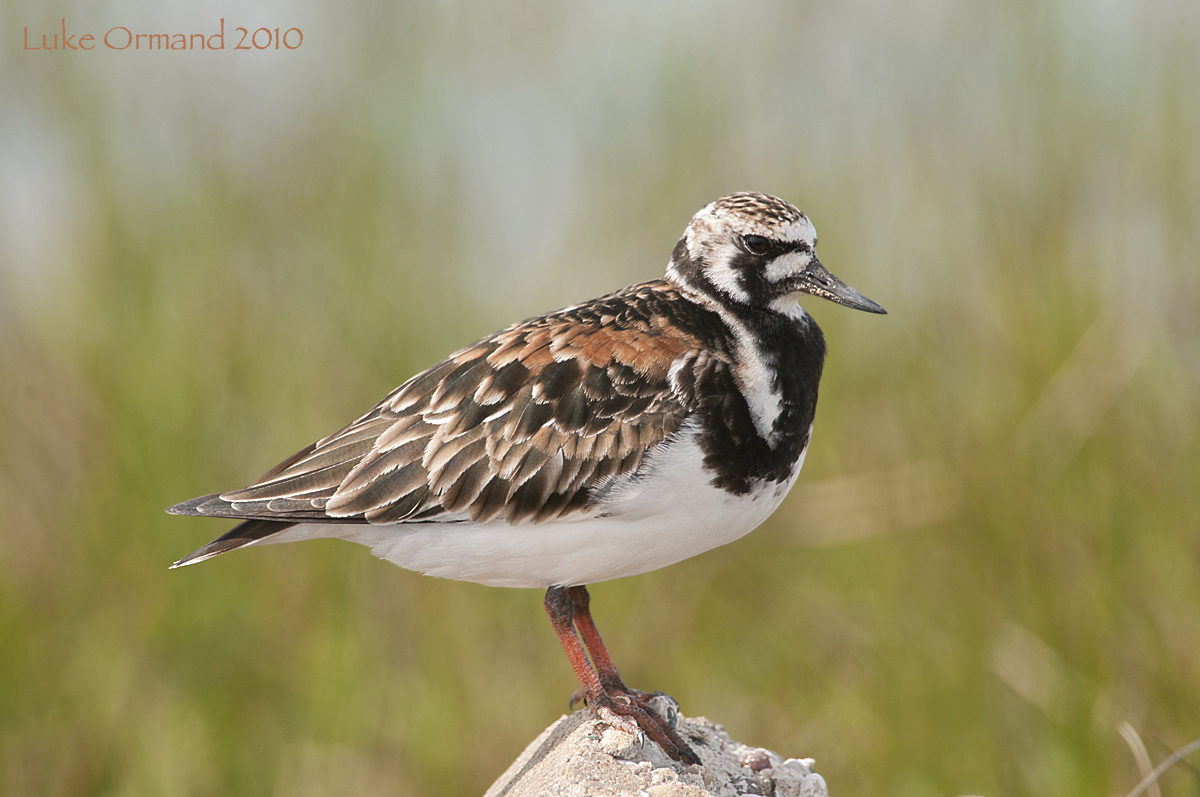 |
| A Ruddy Turnstone during migration |
The View from Lazy Point is an eye opening adventure and scientific endeavor. By book's end, the title takes on a literal meaning. The View is not simply the picture that mother nature paints outside Dr. Safina's beachfront cottage. The entire world truly can be seen from Lazy Point - every link in the food chain - every side effect of man kind's gluttonous and wanton ways. The author analyzes the ravenous desires of man and points out the political and economic hurdles that pit us against a natural world in harmony. This book is not to be speed read to discover the ending - for there is no "ending" to the problems that face us. It is a glimpse in time, a mere fraction of a second on planet Earth's clock that shows us where we are and how we got here. Dr. Safina does not have every answer for every problem facing us - but he gives us guidelines to right the ship before we discard our miraculous gifts like so many others we have swept under the proverbial carpet. If we stop being selfish, stop justifying our wasteful ways because we are the "Have's" and therefore can exploit the shares of the "Have Not's" - then we can get back on the proper heading. The modern world is used to throwing the used and spent in the garbage - but there is no landfill to toss nature into - only a cold and dark grave. Writes Dr. Safina, "To advance compassion and yet survive in a world of appetites - that is our challenge".
Please click on the image below to purchase this book from Amazon.com. It is easily the most thought provoking environmental book I've had the pleasure to read and it will both entertain you and influence how you see the world. And if you're living on the Island, a trip to Montauk is in order once you have finished this journey.


